Family-owned · Bellevue Local
Grass Seeding for a Thicker, Fuller Lawn
Professional seeding with proper soil prep so your grass actually grows, not just sits on top.
Free estimate
Tell us what you need
Three fields. It reaches a person here, not a call centre.
Grass Seeding That Takes Root
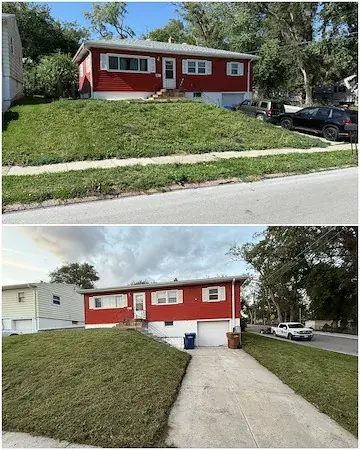
Grass seeding fills bare and thin spots by preparing the soil, spreading seed suited to Nebraska lawns and keeping it watered until it takes. Frontline Home Services seeds lawns in Papillion, Bellevue and across the Omaha metro. Sprinkling grass seed on bare dirt doesn't work. Most people find that out the hard way. The seed sits on the surface, dries out, birds eat it, and two weeks later you've got the same patchy lawn you started with. The fix isn't more seed. It's proper soil contact, the right seed variety for Nebraska's climate, and timing the job correctly. At Frontline Home Services, Andy handles grass seeding the same way he handles every job: with a process, not a guess. Call (402) 218-0676 to talk through what your lawn actually needs.
A good seeding job starts before the seed bag opens. Soil gets loosened, low spots get addressed, and the existing turf gets evaluated so the new seed isn't competing against dead thatch. For Nebraska yards, cool-season grasses seed best in late August through mid-October, when soil temps are right and summer heat won't stress new seedlings. Spring is second-best. Cool-season grass seeded in July in this climate is mostly a waste of money. Frontline serves the full Omaha metro and can assess your yard's specific conditions before recommending a seed type and schedule. Every job is different -- contact Frontline Home Services for an accurate estimate.
Call (402) 218-0676Why Most DIY Seeding Fails
No Soil-to-Seed Contact
Seed dropped onto existing grass or hard soil never germinates. It needs to touch loose soil, not sit on top of a mat of thatch. That's the single biggest germination factor and the one DIYers skip most often.
Wrong Seed for Nebraska
Nebraska is cool-season grass territory: tall fescue, Kentucky bluegrass, perennial ryegrass. Warm-season varieties from the big-box shelf won't establish the way you need in this climate. Seed selection isn't complicated, but it has to match your region.
Bad Timing
Late summer into early fall is the window. Soil temps around 50-65 degrees, cooler nights, fall rains on the way. Seeding in July means seedlings hit brutal heat before roots develop. Seeding in November means nothing germinates until spring at best.
Inconsistent Watering After
New seed needs light, frequent watering for the first two to three weeks. Not one deep soak every few days. The top half-inch of soil should stay consistently moist, not soggy. Most new seedings fail in the two weeks after, not during the application.
The Process
How Frontline Seeds a Lawn
Three steps, done in order, every time.
Assess and Prepare
Andy evaluates the existing turf, identifies bare and thin areas, and loosens the soil surface so seed has somewhere to land and anchor. Compacted or heavily thatched areas get extra attention before anything gets spread.
Select and Apply
The right cool-season seed mix for your yard's sun exposure and use gets applied at the correct rate with professional equipment. Uniform coverage matters. Thin application in spots means thin coverage in those spots, full stop.
Starter Fertilizer and Instructions
A starter fertilizer gets applied to support early root development. You'll leave knowing exactly how to water, when to stay off the lawn, and when to expect visible growth. No guessing on your part.
Nebraska Climate
Seeding Timing for the Omaha Area
What a Professional Seeding Covers
- 01
Site Assessment
Identify bare patches, thin areas, compaction issues, and thatch buildup before selecting approach.
- 02
Soil Surface Preparation
Loosen soil to create the seed-to-soil contact that actually drives germination. Skip this step and you're wasting seed.
- 03
Seed Selection and Application
Cool-season mix matched to your yard's conditions, applied evenly with professional equipment at the correct seeding rate.
- 04
Starter Fertilizer
Applied at seeding to support early root development and give new grass a real foundation to grow from.
Veteran-Owned, Detail-Oriented Work
Frontline Home Services is veteran-owned and operated, with 42 five-star Google reviews and a satisfaction guarantee on every job.
- 42 five-star Google reviews Verified on Google Business Profile
- BBB Accredited Business Frontline Home Services
- Veteran owned and operated Andy Simmons, Owner
- Satisfaction guarantee on every job We make it right if something's off
Grass Seeding Questions, Answered
Can you just throw grass seed down without any prep?
What month is best to seed grass in Nebraska?
What are the most common grass seeding mistakes homeowners make?
How long does it take for grass seed to grow in Omaha-area yards?
Should I seed over existing thin grass or kill it off first?
Does Frontline offer any lawn care services after seeding?
Get started
Ready to Fix That Lawn?
Veteran-owned. 42 five-star reviews. Satisfaction guaranteed.
Call Andy at Frontline Home Services and get a straight answer on whether now is the right time to seed and what your yard actually needs.
5.0 from 42 Google reviews